Published: 02/20/2026
- Course is ideal for Stanford students of all levels interested in a career involving global health, health equity, medicine, or global governance
- Application required – see below for details
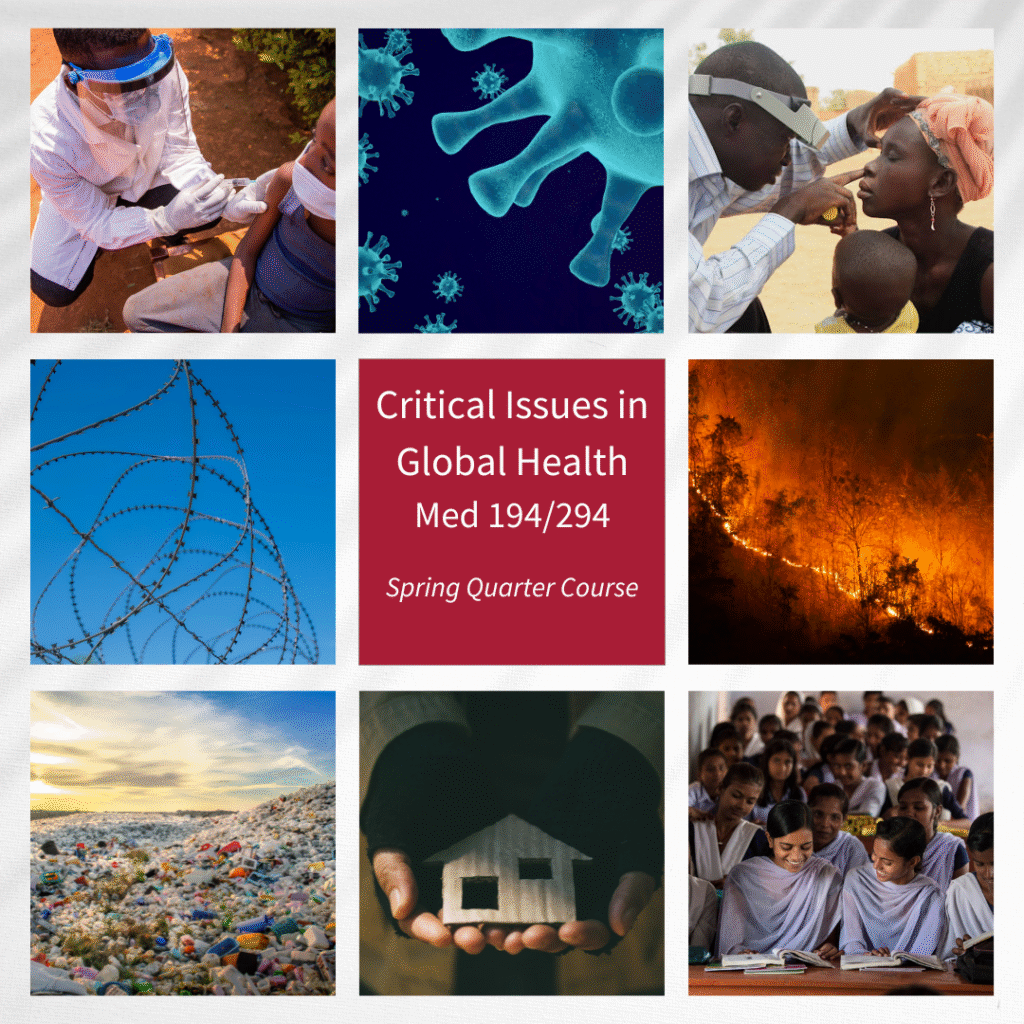
As global health faces unprecedented challenges, including significant funding cuts, shifts in governance such as the U.S. withdrawal from the WHO, and the end of USAID, this spring quarter course offers a vital platform for students to engage with these pressing issues at a critical inflection point. Hosted by the Stanford Center for Innovation in Global Health, Med 194/294: Critical Issues in Global Health invites students to discuss and engage critically with current topics and pressing issues in global health through the lens of health equity and social justice.
Med 194/294: Critical Issues in Global Health will focus on topics including, but not limited to:
- The consequences of global funding cuts
- Health systems strengthening and workforce resilience
- Climate’s impact on health
- How nations heal from trauma; mental health
- Global blindness and inequities
- Women’s leadership in global health
- Global vaccine equity
- Biosecurity and pandemic resilience
- Pharma inequities globally
- New technologies and AI and the future of global health
Engage with diverse global health leaders
Two global health leaders teach the course: Dean of Global Health Michele Barry, Shenson Professor of Medicine and Tropical Diseases and director of the Stanford Center for Innovation in Global Health and Dr. Geoffrey Tabin, Fairweather Foundation Professor of Ophthalmology and Global Medicine and a leader in global ophthalmology.
“I found it very informative and it has left me with a much greater knowledge of the state of global health and what we can do/ is being done to minimize the inequities faced,” wrote one student reviewing this course. “The speakers are leaders in their respective fields and I learned a great deal from their expertise. Dr. Barry and Dr. Tabin are fantastic instructors and truly care about your input and feedback. This class is a 10/10.”
During the course, students will hear from and engage with global health experts and debate critical issues through course discussions. Guest speakers include:
- Dr. Anthony Fauci, Distinguished University Professor at Georgetown University School of Medicine and McCourt School of Public Policy, who served as the director of the National Institute of Allergy and Infectious Diseases from 1984 to 2022, and the chief medical advisor to the president from 2021 to 2022
- Dr. Madhu Pai, a global health leader, health equity advocate, and tuberculosis expert;
- Dr. Mamphela Ramphele, a medical doctor, social anthropologist, and co-founder of The Black Consciousness Movement with Steve Biko that reignited the struggle for freedom in South Africa,
- Vanessa Kerry, Chief Executive Officer, Seed Global Health and WHO Special Envoy for Climate Change and Health;
- and Olufunke “Funke” Fasawe, Vice President Integration and Country Director Nigeria and Interim Regional Director at Clinton Health Access Initiative
Critically consider current events through a global health lens
Participants will gain new insights into the health equity considerations critical to addressing contemporary challenges, explore diverse perspectives on key issues, and critically consider current and potential interventions through the lens of a global health practitioner.
“Very informative course about the current state of global health – I learned a lot about topics that I was never exposed to before. The weekly reflections make you think about the presentations, and the midterm outline and final project are based on your own implementation of a public health intervention on a country/topic of your choosing,” wrote another student reviewing the course.
Three-unit students will investigate a global health equity challenge and present recommendations for effective interventions. Requirements include attendance and participation in class discussions, a short capstone presentation, and a final paper.
Dive deeper into the course topics during discussion sections
In weeks 2-9, the teaching team will hold discussion sections. These sessions will provide a valuable opportunity to engage with both Faculty leads in a small, intimate setting. The TAs will also be walking through engaging exercises to help three-unit students prepare for their final projects. Exercises from last year include: guided walk-throughs of the midterm outline and final papers, headline activities analyzing global health news sources, and presentations overviewing the theory of change method for refining global health interventions over broad spheres of influence.
Course details:
- Wednesdays, 9:30-11:20am
- The teaching team will be holding a discussion section on Wednesdays, 11:30am – 12:30pm (right after class). Students are strongly encouraged to attend the discussion sessions and students who attend all sessions will receive extra credit points.
- Enrollment is open to medical students, graduate students, and undergraduate students (2-3 Units). The course will be capped at 45 students.
- Counts as required coursework toward the following programs:
- Global Health Scholarly Concentration for medical students
- Human Biology Global Health Subplan Elective for undergraduate students
- Ways of Thinking, Ways of Doing (Ways) Requirement: Exploring Difference and Power (students must take the course for three units and for a letter grade in order for it to count)
Application Required Students must apply for this course. Apply by Friday, March 13 at 9am using this link.